Why Canada?: Immigration and Homesteading
“Far places seemed so much more glamorous. We talked of America, Africa, and Australia, and finally we decided on Canada. It was closer to England; the neighbouring country, the United States, was friendly, and there was a general feeling that England and America would never go to war. Australia was halfway around the world. If we went to Canada, we would be able to take holiday trips to England every few years. So it went, so we decided on Canada.”
– George Shepherd
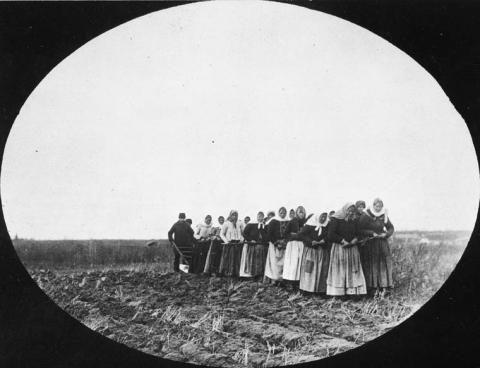
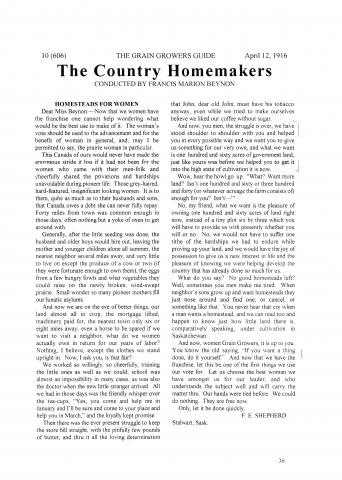
In England, William and Fanny tried their hands at operating a farm but returned to the butchering business before deciding to emigrate to Canada. By this time, American beef had arrived and began to undercut, the English butchering market. American beef had also taken advantage of new refrigeration technology. William though initially staunchly opposed to this new import, started working for the American meat packing company Swift’s. Eager for new opportunities beyond what was possible in Victorian England, William and his son George left for Canada in 1908, arriving first in the Canadian Maritimes before boarding trains westward.
~
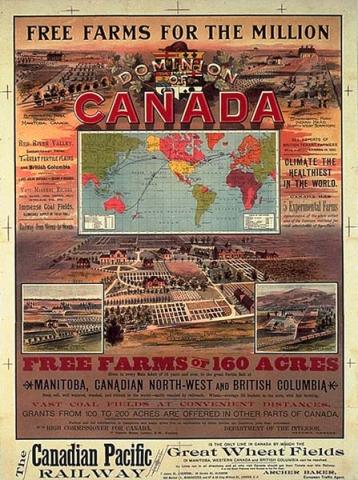
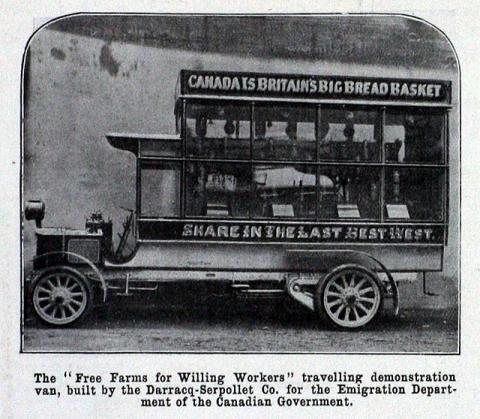
There were many reasons why Canada appealed to families such as the Shepherds: It was an attractive country to English families due to its ties with Britain; before its Confederation in 1867, the Dominion of Canada was British North America. Furthermore, by “clearing” the West for settlement, the Government of Canada displaced many Indigenous peoples of the Prairies, effectively paving the way for (often free to homestead) European settlements. In other words, many significant changes to Canada’s geography and rule made immigration of this scale possible:
1871: The signing of Treaties 1 and Treaty 2, which, from the perspective of British Crown officials, were meant to facilitate the settlement of Indigenous lands and the assimilation of Indigenous peoples. Treaty 1 was with the Anishinabek and Swampy Cree of southern Manitoba, while Treaty 2 was with the Anishinabek of southern Manitoba. For the Indigenous peoples of these lands, these Treaties were understood to help protect their lands and livelihoods while providing them with support in transitioning to a period of co-existence with these settlers. These Treaties, consequently, encapsulate the legacy of the different understandings of these two signing parties and the ongoing issues stemming from these documents and so-called “ceded” lands.
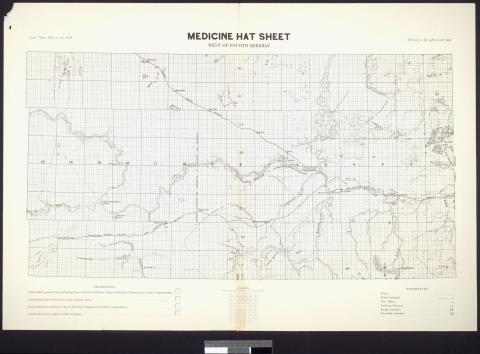
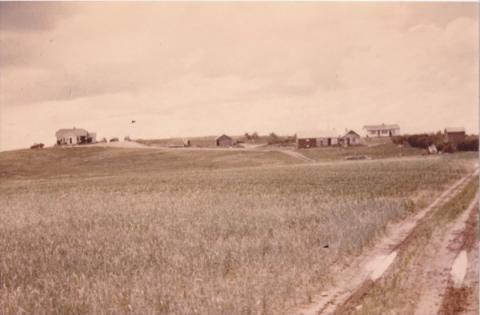
1872: The Dominion Land Acts of this year saw these “ceded” lands as available settlement lands and thus “free and fertile homesteads” for settlers on the lands previously lived on by the Indigenous peoples.
1873: The establishment of the North-West Mounted Police protected these new settlers and their homesteads to further dispossess Indigenous peoples.
1873: The founding of the Department of the Interior created both the conditions to recruit “economic immigrants” and put in place a Minister of Indian Affairs.
1885: The completion of Canada’s transcontinental railway, connecting the Canadian Maritimes to the Pacific Ocean.